The Christmas Break as a Dancer: Finding Space Without Falling Behind

The dance season doesn’t gently slow down. It builds momentum for months. And then suddenly, Christmas Break is around the corner.
By that point, you’ve probably already carried a lot. Rehearsals layered on top of classes. Maybe you just finished a Nutcracker run or Christmas showcase. Maybe you had your first set of competitions & conventions for the season. And on top of that, school deadlines, exams, end-of-year events. Shorter days, fuller schedules.

So, when the Christmas break finally appears on the calendar, it should feel like relief.
But for many dancers, it doesn’t.
Instead of rest, the break brings questions.
You hear other dancers talking about training every day during the holidays. Booking extra privates. Taking workshops. “Using the time wisely.” And even if you want a break, it suddenly feels risky to take one.
You start wondering whether resting means falling behind. Whether slowing down now will undo all the work you’ve put in so far this season.
That tension — between needing rest and fearing loss — is what makes the Christmas break such a tricky moment for dancers.
The Christmas break is very different from summer. It’s not the end of a season — it’s a pause in the middle of one.

Your body has already adapted to months of training. Your mind has been switched on for a long time. You’re not resetting to zero; you’re continuing forward. And that matters.
This break isn’t about pushing ahead aggressively. But it also isn’t about disconnecting completely.
It’s about creating enough space to recover so you can continue well.
Dance asks for more than physical strength. It asks for focus, awareness, emotional regulation, and constant self-correction. You spend a lot of time watching yourself, adjusting yourself, and being evaluated — even when the feedback is supportive and kind.
That level of engagement is exhausting.
Stepping away from the studio, even briefly, gives you distance from mirrors, corrections, comparison, and the quiet pressure to improve every single day. That distance isn’t laziness. It’s part of how growth actually happens.
Over the last 14 years of working in Europe, this idea of rest has become impossible for me to ignore. Across fields — in dance, in sports, and in completely different professions — people truly protect their holiday time. Vacations are not treated as something to “work around,” but something to fully step into. Time away is seen as part of the process, not a break from it. And again and again, I’ve seen how important that is. People return clearer, more focused, and more capable — not behind, but ready.
Of course, it’s completely normal to feel hesitant about stopping.
You’ve worked hard this season. You’ve made progress. You don’t want to lose what you’ve built.

Here’s the reassuring truth: progress doesn’t disappear in a week or two. Especially not after consistent training. What does disappear quickly is accumulated fatigue — physical and mental — and that’s something you actually want to let go of before January.
So instead of choosing between “training hard” or “doing nothing,” it helps to take a more intentional middle path.
Step 1: Choose four intentional dance moments
At the start of the Christmas break, choose just four moments for dance across the entire holiday. Not four days a week — four days total.

Each session can be about an hour. Calm, focused, and pressure-free.
Putting those moments in your agenda does something important. It removes the background anxiety of “I should be doing something.” You’ve already made space for dance, which makes it much easier to truly rest the rest of the time.
Step 2: Reflect before you decide what to work on
Then, make a plan for what you will do in each of those dance moments. And the first step isn’t movement — it’s reflection.
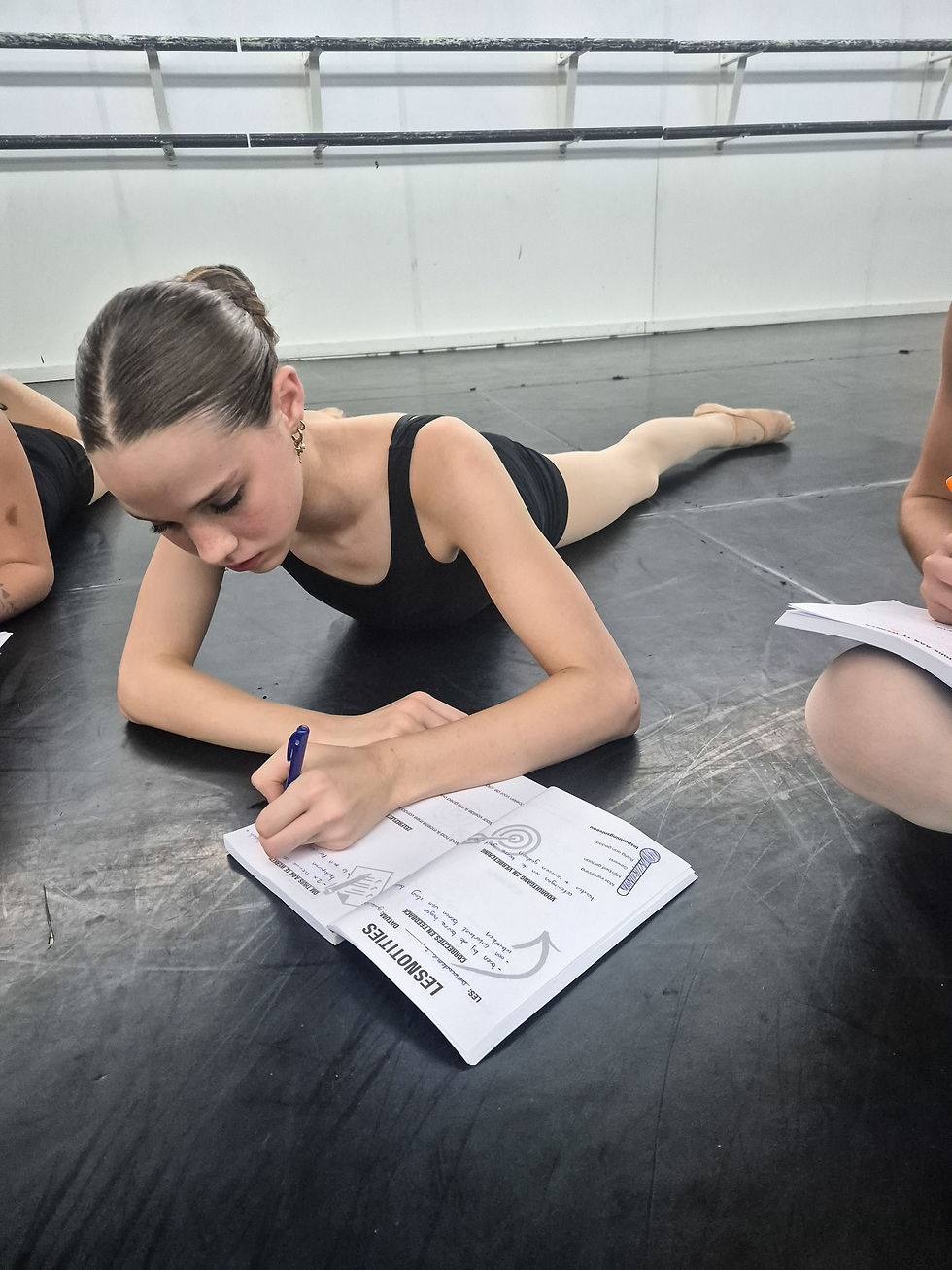
Take a moment to look back. If you keep a dance class journal, this is the perfect time to pull it out and read through your notes from the last few weeks of the season. Corrections that kept coming up. Things you rushed past because December was so busy. Patterns that show up again and again.
Often, something will quietly stand out.
Not everything needs attention — just one or two things that feel worth revisiting now that you finally have space. Maybe it’s choreography for a show that you haven’t managed to nail down yet, or that your turns have been off lately or stamina wasn’t as good as it should be. See what can use your attention during the break.
If you don’t currently keep a dance class journal, this kind of reflection can be harder to do. I created a simple dance journal specifically for moments like this — a place to track notes, patterns, and progress over time. If that’s something you’d find helpful, you can take a look here.
Step 3: Keep the sessions supportive, not exhausting
Once you’ve chosen a focus, find exercises to help with your goals. For example, go through choreography slowly until you don’t have to concentrate on it so hard anymore. Or focus on hamstring stretch and strengthen exercises. Do some exercises for your core and ankles to help stabilize your turns. It’s a chance to maintain what you’ve already built. Time to organize materials or prepare for what’s coming next.

Think quality over quantity.
You’re not trying to peak during the holidays. You’re staying connected.
Just as important as these short dance moments is what happens around them.
During the season, dance can easily become all output — produce, perform, improve. The Christmas break gives you a chance to receive again. To go out and see a performance simply because it moves you. To be inspired without immediately turning that inspiration into pressure.
And beyond dance itself, the break is a chance to recharge mentally in ways training can’t provide. Spending time with friends. Travelling. Reading something unrelated. Trying a different activity. Doing things that remind you that your identity is bigger than your technique.
These experiences don’t pull you away from dance. They deepen your relationship with it.
This pause is also what helps protect you from the mid-season dip so many dancers experience later on. When January arrives and the excitement of the season wears thin, dancers who allowed themselves a real Christmas reset often cope better. Their energy is steadier. Their relationship with training feels more sustainable.
I’ll be writing more about that middle-of-the-season slump soon — but for now, know this: how you handle the Christmas break plays a bigger role than you might think.
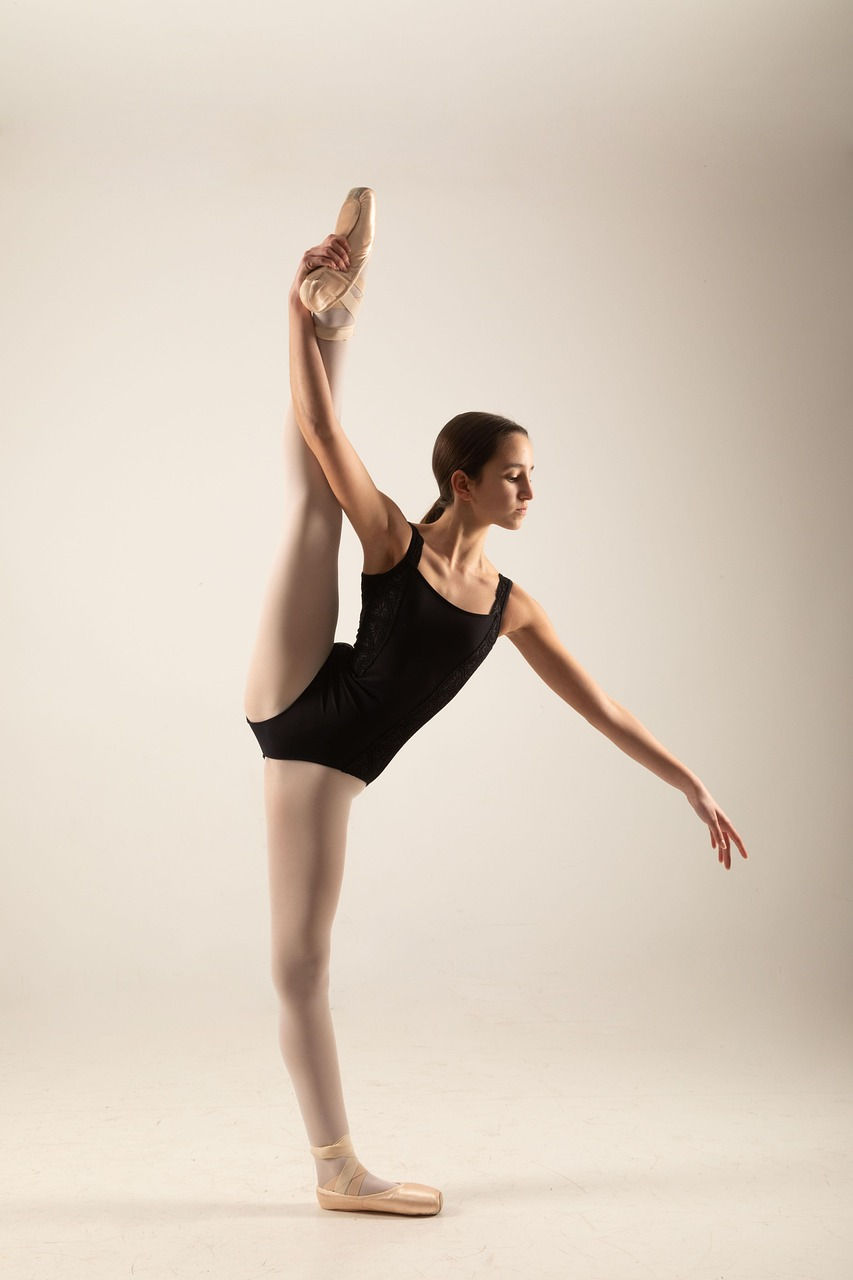
Balance doesn’t look the same for every dancer. It’s not about doing what everyone else does, and it’s not about splitting time evenly between work and rest. Balance means enough rest to feel human again, and enough connection to return with confidence.
When January arrives, you don’t come back stronger because you never stopped. You come back stronger because you allowed yourself to recover.
Your body will remember more than you think. Your mind will be clearer than if you had pushed through exhaustion. And dance will still be there, ready for you to step back in.
This Christmas, aim for balance. Rest your body. Feed your mind.
And trust that stepping back — briefly and intentionally — is part of moving forward.
Happy holidays!


Comments